Chemical safety technical specification | Edition:1.0 |
Prepared according to GB/T16483、GB/T17519 | Revision date:10.07.2019 |
| Date of printing:19.02.2020 |
| Date of initial preparation:25.05.2017 |
WEB:www.bio-fount.com | SDS number:BIOFOUNT-HXH502086 |
Copyright: BIOFOUNT BEIJING BIO TECH CO.,LTD | Product number:BIOFOUNT-HXH502086 |
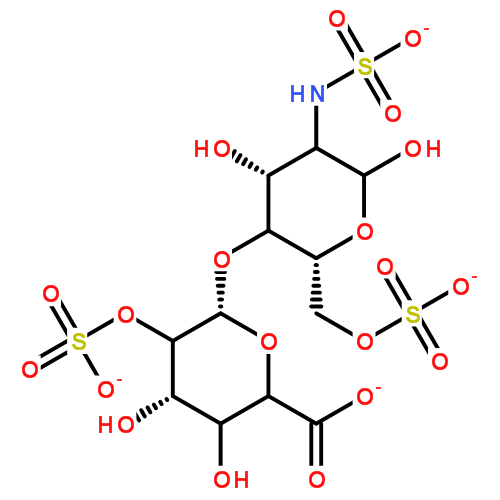
Heparin Sodium Salt from Hog intestine |
List of instructions |
Part 1 | chemicals and enterprise logo | Part 2 | risk overview |
Part 3 | Composition / composition information | Part 4 | first aid measures |
Part 5 | fire fighting measures | Part 6 | Leakage Emergency Treatment |
Part 7 | handling and storage | Part 8 | exposure control / personal protection |
Part 9 | physical and chemical properties | Part 10 | stability and reactivity |
Part 11 | toxicological information | Part 12 | ecological hazard information |
Part 13 | waste disposal | Part 14 | Transport Information |
Part 15 | information on laws and regulations | Part 16 | other supplementary information |
Part 1: chemicals and enterprise logo |
1.1 product identification |
Product Name: | Heparin Sodium Salt from Hog intestine |
English Name: | Heparin Sodium Salt from Hog intestine |
Product No.: | HXH502086 |
Brand: | BIOFOUNT |
(CAS No.): | 9041-08-1 |
1.2 details of suppliers of safety technical specifications |
Name of manufacturer or supplier: | BIOFOUNT BEIJING BIO-TECH CO.,LTD |
Manufacturing address: | 59 Kangtai Avenue Binhai New District Tianjin 300450 TIANJIN CHINA BIOFOUNT (Tianjin) Biotechnology Co., Ltd Jiuzhou tonglvgu Health Industrial Park, No. 59, Kangtai Avenue, Binhai New Area, Tianjin Post code: 300450 |
Phone number: | |
1.3 emergency consultation telephone |
Emergency contact number: | |
1.4 recommended and restricted uses of the substance or mixture |
Identified uses: | It is only used for scientific research and development, not for medicine, family or other purposes. |
Part 2: risk overview |
2.1 hazard categories of GHS |
No data available |
2.2 GHS labeling elements, including precautionary statements |
Pictogram |
No data available |
Signal word |
No data available |
Declaration of danger |
No data available |
Warning statement |
No data available |
preventive measure |
No data available |
Accident response |
1. In case of accident or emergency during the use of chemicals, the party concerned shall report to the person in charge of the emergency response team as soon as possible, and the emergency response team shall take measures to prevent the situation from expanding. 3. The emergency team shall take rescue measures for the victims. |
Storage |
No data available |
Waste disposal |
No data available |
2.3 physical and chemical hazards |
No data available |
2.4 health hazards |
No data available |
2.5 environmental hazards |
No data available |
2.6 other hazards |
No data available |
Part 3: Composition / composition information |
Substance / mixture | material |
3.1 substances |
Molecular formula | No data available |
molecular weight | No data available |
(CAS No.) | 9041-08-1 |
EC- number | No data available |
According to the corresponding regulations, there is no need to disclose specific components. |
Part 4: first aid measures |
4.1 description of necessary first aid measures inhalation |
inhalation |
Inhalation: Immediately leave the contaminated area; take deep breaths of fresh air. If symptoms (such as wheezing, coughing, shortness of breath, or burning in the mouth, throat, or chest) develop, call a physician and be prepared to transport the victim to a hospital. Provide proper respiratory protection to rescuers entering an unknown atmosphere. Whenever possible, Self-Contained Breathing Apparatus (SCBA) should be used; if not available, use a level of protection greater than or equal to that advised under Protective Clothing. |
Skin contact |
Skin:Immediately flood affected skin with water while removing and isolating all contaminated clothing. Gently wash all affected skin areas thoroughly with soap and water. If symptoms such as redness or irritation develop, Immediately call a physician and be prepared to transport the victim to a hospital for treatment. |
Eye contact |
eyes: First check the victim for contact lenses and remove if present. Flush victim's eyes with water or normal saline solution for 20 to 30 minutes while simultaneously calling a hospital or poison control center. Do not put any ointments, oils, or medication in the victim's eyes without specific instructions from a physician. Immediately transport the victim after flushing eyes to a hospital even if no symptoms (such as redness or irritation) develop. |
Ingestion |
Ingestion: Do not induce vomiting,If the victim is conscious and not convulsing, give 1 or 2 glasses of water to dilute the chemical and Immediately call a hospital or poison control center. Be prepared to transport the victim to a hospital if advised by a physician. If the victim is convulsing or unconscious, do not give anything by mouth, ensure that the victim's airway is open and lay the victim on his/her side with the head lower than the body. DO NOT Induce vomiting.Immediately transport the victim to a hospital. |
4.2 most important symptoms and health effects |
The most important known symptoms and effects are described in the label (see Chapter 2.2) and / or Chapter 11 |
4.3 instructions and instructions for timely medical treatment and special treatment required |
No data available |
4.4 special tips for doctors |
No data available |
Part 5: fire fighting measures |
5.1 extinguishing media |
Fire extinguishing method and agent |
Fires involving this compound should be controlled using a dry chemical, carbon dioxide, foam or Halon extinguisher. |
5.2 special hazards from this substance or mixture |
No data available |
5.3 precautions and protection measures for fire fighting |
In case of small-scale fire, masks shall be worn to prevent the inhalation of toxic gas. In case of fire, the emergency response system shall be started in time to evacuate to the upper air outlet, and the local fire department shall be contacted to put out the fire. |
Part 6: Leakage Emergency Treatment |
6.1 personnel protection measures, protective equipment and emergency disposal procedures |
1. Start the emergency response system first after leakage. 2. Before leakage treatment, wear safety protection shoes, safety protection gloves (anti acid and alkali gloves are required for strong acid substances), and wear corresponding protective masks according to the inhalation risk. For personal protection, see Part 8. |
6.2 environmental protection measures |
Refer to the treatment method of Fande biochemical waste to prevent harm to the environment. After treatment, the waste shall be treated by a qualified waste treatment structure to avoid environmental pollution. |
6.3 storage, removal methods and disposal materials of leaked chemicals |
The leaked chemicals shall be treated according to the treatment method of Fande biological chemical waste. Before treatment, the leaking area shall be enclosed with chemical absorbent rock wool to form a "cofferdam" to prevent the leakage from expanding. |
6.4 reference to other parts |
See section 13 for disposal. |
Part 7: handling and storage |
7.1 precautions for safe operation |
Please wear masks, gloves and other protective articles during use to avoid contact with skin, inhalation and accidental ingestion. See Section 2.2 for precautions. |
7.2 conditions for safe storage, including any incompatibility |
It is unable to provide detailed data for the time being. Try to avoid mixed storage with other compounds and storage in dark and ventilated places. |
Part 8: exposure control / personal protection |
8.1 control parameters |
Hazard composition and occupational exposure limit |
No data available |
8.2 exposure control |
Appropriate technical controls |
No data available |
Personal protective equipment |
Eye protection Please use equipment tested and approved by official standards such as NIOSH (USA) or en 166 (EU) for eye protection. |
Skin protection Take out by hand: gloves must be inspected before use. Please use proper methods to remove the gloves (do not touch the outer surface of the gloves), and avoid any skin parts contacting the product. After use, please handle the contaminated gloves carefully according to relevant laws and regulations and effective laboratory rules and procedures. Please wash and dry your hands. The selected protective gloves must meet the specifications given in regulation (EU) 2016 / 425 and the en 374 standard derived from it. Full contact Material: NBR Minimum layer thickness 0.11 mm Solvent penetration time: 480 minutes Splash protection Material: NBR Minimum layer thickness 0.11 mm Solvent penetration time: 480 minutes If applied in solvent form or mixed with other substances, or under conditions different from those specified in en 374, please contact the supplier of gloves approved by EC. This recommendation is only suggestive and must be evaluated and confirmed by an industrial hygiene expert familiar with the specific situation our customer plans to use. This should not be interpreted as providing approval for any particular usage method. |
Body protection Choose physical protection measures according to the type, concentration and quantity of hazardous substances and specific workplace. The type of protective equipment must be selected according to the concentration and quantity of hazardous substances in the specific workplace. |
respiratory system protection There is no need to protect breathing. To protect against dust damage, use N95 (US) or P1 (EN 143) dust masks. Respirators use respirators and parts that have been tested and passed government standards such as NIOSH (US) or cen (EU). |
Control of environmental exposure |
Do not let the product into the sewer. |
Part 9: physical and chemical properties |
9.1 information on basic physical and chemical properties |
Appearance and character | shape:No data available |
| colour:No data available |
smell | No data available |
Odor threshold | No data available |
PH value | No data available |
Melting point / freezing point | No data available |
Initial boiling point and boiling range | |
flash point | |
Evaporation rate | No data available |
Flammability (solid, gas) | No data available |
High / low flammability or explosive limits | No data available |
Vapor pressure | No data available |
Vapor density | No data available |
Density / relative density | No data available |
Water solubility | No data available |
Partition coefficient of n-octanol / water | Log POW: |
Air distribution coefficient of n-octanol | No data available |
Spontaneous combustion temperature | No data available |
decomposition temperature | No data available |
viscosity | No data available |
Explosion characteristics | No data available |
Oxidizing | No data available |
Estimation of hydrosol from fragments | No data available |
Henry's law constant (25 ℃) | No data available |
9.2 other safety information |
No data available |
Part 10: stability and reactivity |
10.1 stability |
No data available |
10.2 hazardous reactions |
No data available |
10.3 conditions to avoid |
No data available |
10.4 prohibited substances |
Strong oxidant |
10.5 hazardous decomposition products |
No data available |
Part 11: toxicological information |
11.1 toxicological impact information |
toxicity |
No data available |
Skin corrosion / irritation |
No data available |
Serious eye injury / eye irritation |
No data available |
Respiratory or skin allergies |
No data available |
Germ cell mutagenicity |
No data available |
carcinogenicity |
No data available |
Reproductive toxicity |
No data available |
Specific target organ systemic toxicity (one exposure) |
No data available |
Specific target organ systemic toxicity (repeated exposure) |
No data available |
Inhalation hazard |
No data available |
Additional description |
No data available |
Part 12: ecological hazard information |
12.1 ecotoxicity |
No data available |
12.2 durability and degradability |
No data available |
12.3 possibility of rapid biodegradation |
No data available |
12.4 expert investigation of biodegradation results |
No data available |
12.5 possibility of MITI biodegradation |
No data available |
12.6 possibility of anaerobic biodegradation |
No data available |
12.7 ready made biodegradability prediction |
No data available |
12.8 hydrocarbon biodegradation |
No data available |
12.9 adsorption of aerosols |
No data available |
12.10 hydroxyl radical reaction |
No data available |
12.11 ozone reaction |
No data available |
12.12 fraction of particulate adsorption in air (PHI) |
No data available |
12.13 soil adsorption coefficient |
No data available |
12.14 alkali / acid catalyzed hydrolysis (25 ℃) |
No data available |
12.15 estimating bioaccumulation using log Kow |
No data available |
12.16 removal in wastewater treatment |
No data available |
12.17 three level fugacity model |
No data available |
12.18 mobility in soil |
No data available |
12.19 evaluation of PBT and vpvb results |
No data available |
12.20 other harmful effects on the environment |
No data available |
Part 13: waste disposal |
13.1 waste treatment |
Product method |
None |
Contaminated packaging |
None |
Part 14: Transport Information |
14.1 UN number |
ADR/RID: | None |
IMDG: | None |
IATA-DGR: | None |
14.2 UN proper shipping name |
ADR/RID: | None |
IMDG: | None |
IATA-DGR: | None |
14.3 Transport hazard class(es) |
ADR/RID: | None |
IMDG: | None |
IATA-DGR: | None |
14.4 Packaging group |
ADR/RID : | None |
IM0DG: | None |
IATA-DGR: | None |
14.5 Environmental hazards |
None |
14.6 Special precautions for user |
None |
14.7 Incompatible materials |
None |
Part 15: information on laws and regulations |
15.1 rules / regulations specific to the safety, health and environment of the substance or mixture |
Applicable laws and regulations |
None |
Other provisions |
None |
Part 16: other supplementary information |
Other information Copyright:FOUNT BEIJING BIO TECH CO.,LTD. Unlimited paper copies are permitted, for internal use only. The above information is deemed to be correct, but does not contain all information. It is only used as a guide. The information in this document is based on what we know at present and is applicable to this product in terms of correct safety tips. This information does not guarantee the nature of this product. Biofount and its affiliates shall not be liable for any damage caused by any operation or contact with the above products. For further terms of use, see the reverse side of the invoice or packing slip. For further terms and conditions of sale, please refer to http://www.bio-foundation.com/ or the back of the invoice or packing list. The logo on the header or footer of this document may temporarily not visually match the product purchased as we are transitioning our brand. However, all information about the products in this article remains unchanged and is consistent with the products ordered. For more information, please contact: sales@bio-foundation.com |



 购物车
购物车