
 购物车
购物车 
-
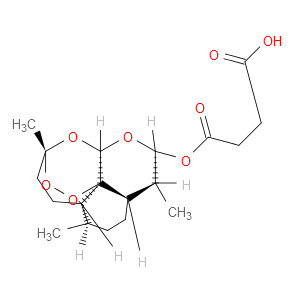
青蒿脂
NMR and HPLC COA下载 MSDS下载 - Names:
Artesunate
- CAS号:
88495-63-0
MDL Number: MFCD00866204 - MF(分子式): C19H28O8 MW(分子量): 384.42
- EINECS:NA Reaxys Number:
- Pubchem ID: Brand:BIOFOUNT
| 货品编码 | 规格 | 纯度 | 价格 (¥) | 现价(¥) | 特价(¥) | 库存描述 | 数量 | 总计 (¥) |
|---|---|---|---|---|---|---|---|---|
| YZM000758-100mg | 100mg | >98.0% | ¥ 810.00 | ¥ 810.00 | 2-3天 | ¥ 0.00 | ||
| YZM000758-50mg | 50mg | >98.0% | ¥ 488.00 | ¥ 488.00 | 2-3天 | ¥ 0.00 | ||
| SA0021-25g | 25g | 99% | ¥ 498.00 | ¥ 498.00 | 3-5days | ¥ 0.00 | ||
| SA0021-5g | 5g | 99% | ¥ 248.00 | ¥ 248.00 | 3-5days | ¥ 0.00 |
| 中文别名 | 青蒿脂(Artesunate,88495-63-0);青蒿琥酯,99%;青蒿脂;青蒿琥酯;青蒿虎脂;青蒿琥酯(标准品);ARTESUNATE 青蒿琥酯;青蒿琥酯杂质;青蒿琥酯(水溶) |
| 英文别名 | Artesunate(青蒿酯,88495-63-0)Artesunate, 99%; artesunate; artesunate; artesunate tiger fat; artesunate (standard); ARTESUNATE artesunate; artesunate impurities; artesunate (water soluble) |
| CAS号 | 88495-63-0 |
| Inchi | InChI=1S/C19H28O8/c1-10-4-5-13-11(2)16(23-15(22)7-6-14(20)21)24-17-19(13)12(10)8-9-18(3,25-17)26-27-19/h10-13,16-17H,4-9H2,1-3H3,(H,20,21)/t10-,11-,12+,13+,16+,17-,18-,19-/m1/s1 |
| InchiKey | FIHJKUPKCHIPAT-NKHDUEHSSA-N |
| 分子式 Molecular Weight | C19H28O8 |
| 分子量 Formula | 384.42 |
| 溶解度Solubility | Soluble in DMSO (25 mg/mL), and ethanol (25 mg/mL).solubility acetone: 33.4 mg/mL. |
| 性状 | No data available |
| 储藏条件 Storage conditions | 储存温度2-8℃ |
1.实验前需戴好防护眼镜,穿戴防护服和口罩,佩戴手套,避免与皮肤接触。
2.实验过程中如遇到有毒或者刺激性物质及有害物质产生,必要时实验操作需要手套箱内完成以免对实验人员造成伤害。
3.取样品的移液枪头需及时更换,必要时为避免交叉污染尽可能选择滤芯吸头。
4.称量药品时选用称量纸,并无风处取药和称量以免扬撒,试剂的容器使用前务必确保干净,并消毒。
5.取药品时尽量采用多个药勺分别使用,使用后清洗干净后,烘干消毒存放。
6.实验后产生的废弃物需分类存储,并交于专业生物废气物处理公司处理,以免造成环境污染。
Experimental considerations:
1. Wear protective glasses, protective clothing and masks, gloves, and avoid contact with the skin during the experiment.
2. The waste generated after the experiment needs to be stored separately, and handed over to a professional biological waste gas treatment company to avoid environmental pollution.
Tag:青蒿脂MSDS,青蒿脂蒸汽压,青蒿脂合成,青蒿脂标准,青蒿脂应用,青蒿脂合成,青蒿脂沸点,青蒿脂闪点,青蒿脂用途,青蒿脂溶解度,青蒿脂价格,青蒿脂作用,青蒿脂结构式,青蒿脂用处,青蒿脂毒理性质,青蒿脂物理性质
| 产品说明 | 青蒿脂(Artesunate,88495-63-0);为疟原虫红内期无性体快速杀虫剂,对抗氯喹的恶性疟原虫有效 |
| Introduction | Artesunate(青蒿酯,88495-63-0):As a rapid insecticide for plasmodium anasexuals, artemisinin is effective against chloroquine and Plasmodium falciparum. |
| Application1 | 青蒿酯仅做科学研究以及化学合成中间体使用,88495-63-0其他参数见主页 |
| Application2 | 青蒿酯是一种半合成的青蒿素衍生物,它被证明有效抗寄生虫,如肝吸虫(liver flukes),也显示了对不同类型的肿瘤细胞株有细胞毒性作用 |
| Application3 | ArtesunateArtesun is a water-soluble, semi-synthetic derivative of the sesquiterpine lactone artemisinin with anti-malarial, anti-schistosomiasis, antiviral, and potential anti-neoplastic activities. |
| 警示图 | |
| 危险性 | warning |
| 危险性警示 | No data available |
| 安全声明 | H303吞入可能有害+H313皮肤接触可能有害+H333吸入可能对身体有害 |
| 安全防护 | P264处理后彻底清洗+P280戴防护手套/穿防护服/戴防护眼罩/戴防护面具+P305如果进入眼睛+P351用水小心冲洗几分钟+P338取出隐形眼镜(如果有)并且易于操作,继续冲洗+P337如果眼睛刺激持续+P313获得医疗建议/护理 |
| 备注 | 实验过程中防止吸入、食入,做好安全防护 |
| Review of the clinical pharmacokinetics of artesunate and its active metabolite dihydroartemisinin following intravenous, intramuscular, oral or rectal administration Malaria Journal 20/PMID: 21914160 |
| Development of a simple and specific direct competitive ELISA for the determination of artesunate using an anti-artesunate polyclonal antiserum Tropical Medicine and Health 2016/PMID: 27895526 |
| Artesunate Inhibits Renal Ischemia Reperfusion-Stimulated Lung Inflammation in Rats by Activating HO-1 Pathway Inflammation 2017/PMID: 28921399 |
| Artesunate Protects LPS-Induced Acute Lung Injury by Inhibiting TLR4 Expression and Inducing Nrf2 Activation Inflammation 2017/PMID: 28315999 |
| Synergistic antitumor activity of sorafenib and artesunate in hepatocellular carcinoma cells Acta Pharmacologica Sinica 2020/PMID: 32300243 |
Review of the clinical pharmacokinetics of artesunate and its active metabolite dihydroartemisinin following intravenous, intramuscular, oral or rectal administration
Abstract
Artesunate (AS) is a clinically versatile artemisinin derivative utilized for the treatment of mild to severe malaria infection. Given the therapeutic significance of AS and the necessity of appropriate AS dosing, substantial research has been performed investigating the pharmacokinetics of AS and its active metabolite dihydroartemisinin (DHA). In this article, a comprehensive review is presented of AS clinical pharmacokinetics following administration of AS by the intravenous (IV), intramuscular (IM), oral or rectal routes. Intravenous AS is associated with high initial AS concentrations which subsequently decline rapidly, with typical AS half-life estimates of less than 15 minutes. AS clearance and volume estimates average 2 - 3 L/kg/hr and 0.1 - 0.3 L/kg, respectively. DHA concentrations peak within 25 minutes post-dose, and DHA is eliminated with a half-life of 30 - 60 minutes. DHA clearance and volume average between 0.5 - 1.5 L/kg/hr and 0.5 - 1.0 L/kg, respectively. Compared to IV administration, IM administration produces lower peaks, longer half-life values, and higher volumes of distribution for AS, as well as delayed peaks for DHA; other parameters are generally similar due to the high bioavailability, assessed by exposure to DHA, associated with IM AS administration (> 86%). Similarly high bioavailability of DHA (> 80%) is associated with oral administration. Following oral AS, peak AS concentrations (Cmax) are achieved within one hour, and AS is eliminated with a half-life of 20 - 45 minutes. DHA Cmax values are observed within two hours post-dose; DHA half-life values average 0.5 - 1.5 hours. AUC values reported for AS are often substantially lower than those reported for DHA following oral AS administration. Rectal AS administration yields pharmacokinetic results similar to those obtained from oral administration, with the exceptions of delayed AS Cmax and longer AS half-life. Drug interaction studies conducted with oral AS suggest that AS does not appreciably alter the pharmacokinetics of atovaquone/proguanil, chlorproguanil/dapsone, or sulphadoxine/pyrimethamine, and mefloquine and pyronaridine do not alter the pharmacokinetics of DHA. Finally, there is evidence suggesting that the pharmacokinetics of AS and/or DHA following AS administration may be altered by pregnancy and by acute malaria infection, but further investigation would be required to define those alterations precisely.
- 相关产品
-
< >
- 推荐产品
-
< >
- 最新产品
-
< >
新闻
怎么做细胞爬片免疫组化染色实验
细胞爬片免疫组化染色,是通过细胞爬片是让玻片浸在细胞培养基内,细胞在玻片上生长,主要用于组织学,免疫组织化学...
2020/7/20 22:04:33
提取病毒RNA的实验方法
提取病毒RNA方法分别有:异硫氰酸胍的提取病毒RNA方法、TRIzol LS提取法、Trizol法提取法等等...
2020/7/22 20:29:26
细胞培养耗材技术领先性
细胞培养板行业面临的核心痛点是:常规TC处理后表面亲水角随时间衰减,影响长期培养稳定性,BIOFOUNT高分...
2026/4/28 15:12:51
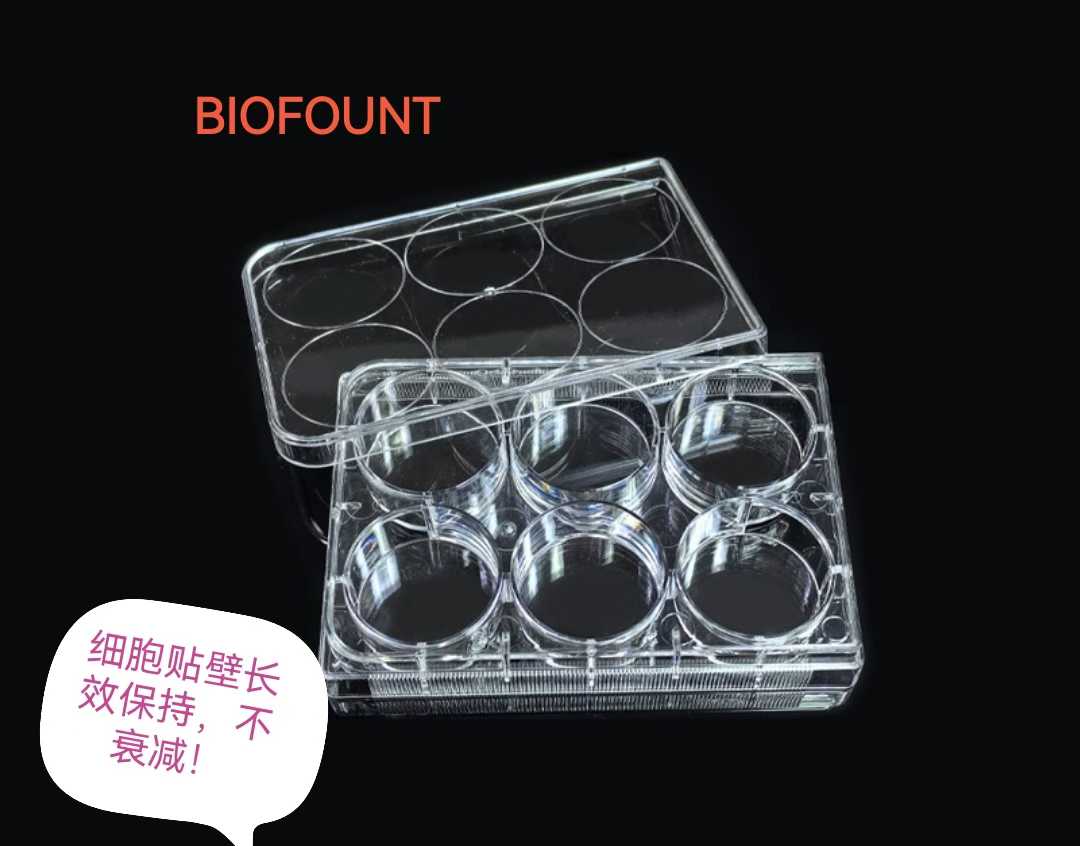
细胞培养耗材关键性能
细胞培养板的水接触角作为表面润湿性的核心指标,直接影响细胞贴壁、增殖、分化及功能表达,其中40°(低接触角/...
2026/4/28 14:52:44
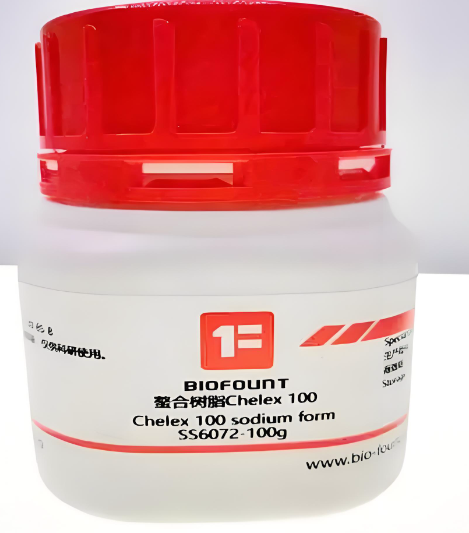
chelex 100树脂国产替代之路-BIOFOUNT范德生物
Chelex 100螯合离子交换树脂对铜、铁和其他重金属?的偏好显著高于对钠、钾等一价阳离子的偏好。它对二价...
2025/11/4 14:22:46
9月开学季——助研新学期 范德送好礼
2025/8/28 15:30:55

Waxfilm 实验室封口膜:技术与国际市场的双重突破
在实验室耗材领域,封口膜是保障实验准确性与稳定性的关键产品之一。近年来,Waxfilm?实验室封口膜凭借其卓...
2025/5/13 13:03:40
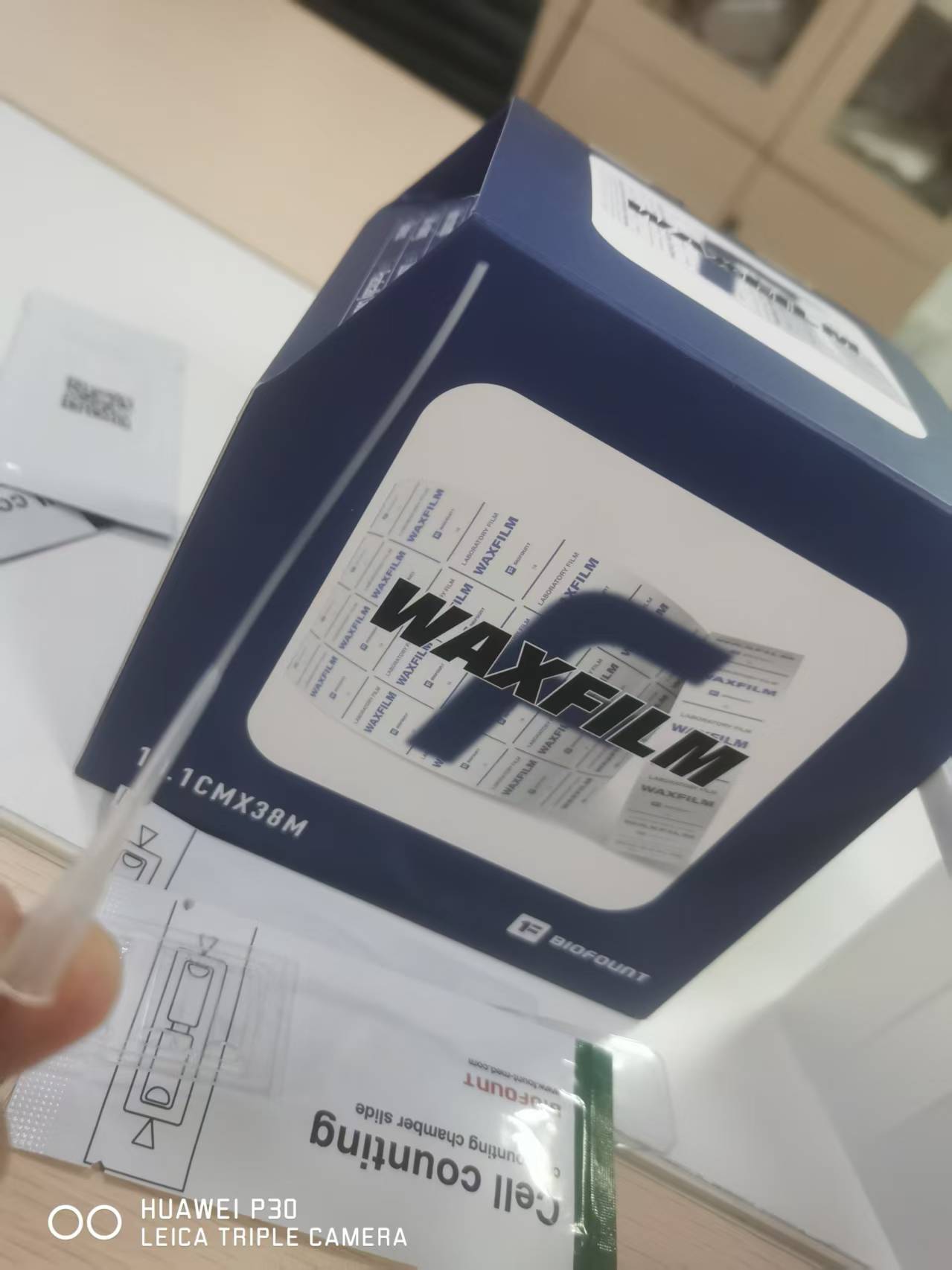
Waxfilm实验室封口膜的5大突破
Waxfilm实验室封口膜作为生物功能膜领域的国产技术突破和品牌突破,是生物领域中国技术发展的缩影。
2025/5/6 17:02:07
各种微流控芯片键合方法的优缺点
微流控芯片键合:目前主要有激光焊接、热压键合、胶键合、超音波焊接,每种方法都有各自的优缺点。本文主要介绍聚酯...
2023/7/28 10:43:09
新一代微流控键合解决方案
微流控键合解决方案:微流控芯片制造的一个重要环节,也是最容易被忽视的--芯片键合。其中一个重要因素是:微流控...
2023/7/27 12:44:28