
 购物车
购物车 
-
氯化钠
NMR and HPLC COA下载 MSDS下载 - Names:
Sodium Chloride
- CAS号:
7647-14-5
MDL Number: MFCD00003477 - MF(分子式): NaCl MW(分子量): 58.44
- EINECS:231-598-3 Reaxys Number:
- Pubchem ID: Brand:BIOFOUNT
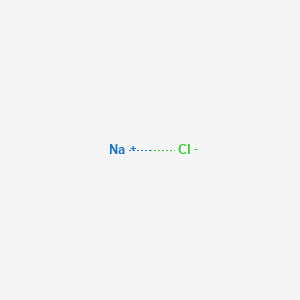
氯化钠(7647-14-5,NaCl,Sodium Chloride,MFCD00003477)通常称为盐,同样是氯化钠产品但会在氯化钠晶向,氯化钠晶型,氯化钠残留等方面有区别,氯化钠是一种化学式为NaCl的离子化合物,氯化钠中钠离子和氯离子的比例为1:1, 氯化钠的摩尔量和质量分别为22.99和35.45 g/mol,100 g的NaCl包含39.34g的Na离子和60.66g的Cl离子。氯化钠在生物实验中可以配置生理盐水,钠离子可参与维持细胞渗透压。
| 货品编码 | 规格 | 纯度 | 价格 (¥) | 现价(¥) | 特价(¥) | 库存描述 | 数量 | 总计 (¥) |
|---|---|---|---|---|---|---|---|---|
| JT0001-500g | 500g | 99% | ¥ 19.00 | ¥ 19.00 | 9 | Instock,1days | ¥ 0.00 | |
| JT0618-500g | 500g | 生物技术级 | ¥ 150.00 | ¥ 150.00 | Instock | ¥ 0.00 | ||
| JT0616-2kg | 2kg | PT,99.8% | ¥ 418.95 | ¥ 418.95 | Instock | ¥ 0.00 | ||
| JT0616-500g | 500g | PT,99.8% | ¥ 119.70 | ¥ 119.70 | Instock | ¥ 0.00 | ||
| JT0615-500g | 500g | GR,99.8% | ¥ 40.00 | ¥ 40.00 | Instock | ¥ 0.00 |
| 中文别名 | 氯化钠(7647-14-5,Sodium Chloride),食盐,氯化钠溶液,盐,氯化钠盐,海盐,工业盐,离子化合物氯化钠,生物级氯化钠,高纯氯化钠, |
| 英文别名 | Sodium Chloride(7647-14-5),Table salt, sodium chloride solution, salt, sodium chloride salt, sea salt, industrial salt, ionic compound sodium chloride, biological grade sodium chloride, high purity sodium chloride, |
| CAS号 | 7647-14-5 |
| Inchi | InChI=1S/ClH.Na/h1H;/q;+1/p-1 |
| InchiKey | FAPWRFPIFSIZLT-UHFFFAOYSA-M |
| 分子式 Molecular Weight | NaCl |
| 分子量 Formula | 58.44 |
| 溶解度Solubility | Soluble in water,35.8% w/w 20℃条件下水中, |
| 性状 | 晶体颗粒或晶体细小粉末 |
| 储藏条件 Storage conditions | 常温下贮存 |
氯化钠的应用:
※ 氯化钠是细胞外液的主要阳离子,主要用于控制水的分布,和应用于体液平衡和体液的渗透压。在调节体液的酸碱平衡中,氯化钠与氯化物和碳酸氢盐有关,氯是主要的细胞外阴离子,紧紧跟随钠的代谢,氯离子浓度的变化反映了人体酸碱平衡的变化;
※ 当体内能量耗尽时,必须补充钠以维持细胞内渗透压,神经传导,肌肉收缩以及保证正常的肾功能;
※ 氯化钠可以配置缓冲盐溶液;
※ 氯化钠可以作为消毒杀菌剂使用;
※ 氯化钠在工业或者实验过程中可以作为中间体或者原料产生企业化学物质。
|
氯化钠毒理参数 |
|||
|
动物 |
测试类型 |
途径 |
报告中的剂量 (标准剂量) |
|
狗 |
LDLo |
intravenous |
2gm/kg (2000mg/kg) |
|
豚鼠 |
LDLo |
intraarterial |
300mg/kg (300mg/kg) |
|
豚鼠 |
LDLo |
intravenous |
300mg/kg (300mg/kg) |
|
豚鼠 |
LDLo |
parenteral |
300mg/kg (300mg/kg) |
|
豚鼠 |
LDLo |
subcutaneous |
2160mg/kg (2160mg/kg) |
|
人 |
TDLo |
oral |
12357mg/kg/23 (12357mg/kg) |
|
男人 |
LDLo |
oral |
1gm/kg (1000mg/kg) |
|
小鼠 |
LD50 |
intracervical |
131mg/kg (131mg/kg) |
|
小鼠 |
LD50 |
intraperitoneal |
2602mg/kg (2602mg/kg) |
|
小鼠 |
LD50 |
intravenous |
645mg/kg (645mg/kg) |
|
小鼠 |
LD50 |
oral |
4gm/kg (4000mg/kg) |
|
小鼠 |
LD50 |
subcutaneous |
3gm/kg (3000mg/kg) |
|
兔 |
LD50 |
skin |
> 10gm/kg (10000mg/kg) |
|
兔 |
LDLo |
intravenous |
1100mg/kg (1100mg/kg) |
|
兔 |
LDLo |
oral |
8gm/kg (8000mg/kg) |
|
鼠 |
LC50 |
intravenous |
> 42gm/m3/1H (42000mg/m3) |
|
鼠 |
LD50 |
oral |
3gm/kg (3000mg/kg) |
|
鼠 |
LDLo |
subcutaneous |
3500mg/kg (3500mg/kg) |
|
氯化钠产品参数 |
|
|
PH值 |
5.0-8.0 (20℃条件下,1M水中) |
|
氯化钠中阴离子残留 |
|
|
|
溴化物(Br-):≤0.01% |
|
|
碘化物(I-):≤0.001% |
|
|
磷酸盐(PO43-):≤0.0005% |
|
|
硫酸盐(SO42-):≤0.05% |
|
氯化钠中阳离子残留 |
|
|
|
Al: ≤0.0005% |
|
|
As: ≤0.0001% |
|
|
Ba: ≤0.0005% |
|
|
Bi: ≤0.0005% |
|
|
Ca: ≤0.002% |
|
|
Cd: ≤0.0005% |
|
|
Co: ≤0.0005% |
|
|
Cr: ≤0.0005% |
|
|
Cu: ≤0.0005% |
|
|
Fe: ≤0.0001% |
|
|
K: ≤0.005% |
|
|
Li: ≤0.0005% |
|
|
Mg: ≤0.0005% |
|
|
Mn: ≤0.0005% |
|
|
Mo: ≤0.0005% |
|
|
Ni: ≤0.0005% |
|
|
Pb: ≤0.0005% |
|
|
Sr: ≤0.0005% |
|
|
Zn: ≤0.0005% |
|
氯化钠的吸收 |
≤0.01 at 260 |
|
≤0.01 at 280 1M水中 |
|
|
氯化钠透过波段 |
0.25~22.00um |
|
氯化钠的晶向 |
<111>.<110>.<100> |
|
氯化钠晶型 |
一般为立方形晶型 |
|
氯化钠晶格常数 |
a=5.642Å |
|
氯化钠透过波段 |
0.25~22.00um |
|
氯化钠折射率nd |
1.54427 |
|
氯化钠杂质吸收锋 |
0.0127 |
|
氯化钠透过率 |
0.9 |
氯化钠(CAS:7647-14-5,NaCl,分子量:58.44)实验注意事项:
1.使用氯化钠实验前需戴好防护眼镜,穿戴防护服和口罩,佩戴手套,避免与皮肤接触。
2.使用氯化钠实验过程中如遇到有毒或者刺激性物质及有害物质产生,必要时实验操作需要手套箱内完成以免对实验人员造成伤害。
3.取氯化钠样品的移液枪头需及时更换,必要时为避免交叉污染尽可能选择滤芯吸头。
4.称量氯化钠药品时选用称量纸,并无风处取药和称量以免扬撒,试剂的容器使用前务必确保干净,并消毒。
5.取氯化钠药品时尽量采用多个药勺分别使用,使用后清洗干净。
6.实验后产生的废弃物需分类存储,并交于专业生物废气物处理公司处理,以免造成环境污染。
大规格定制:定制产品请将信息发送至sales@bio-fount.com。
Experimental considerations:
1. Wear protective glasses, protective clothing and masks, gloves, and avoid contact with the skin during the experiment.
2. The waste generated after the experiment needs to be stored separately, and handed over to a professional biological waste gas treatment company to avoid environmental pollution.

tags:氯化钠 试剂,氯化钠 缓冲液,氯化钠 MSDS,氯化钠 溶液,氯化钠 标准溶液;高纯 氯化钠;氯化钠厂家,氯化钠 公司,氯化钠 熔点,AR级 氯化钠,BR级 氯化钠,PT级 氯化钠,氯化钠提纯,氯化钠分子量,氯化钠MSDS,氯化钠的作用
| 产品说明 | 氯化钠(7647-14-5,Nacl)可以配制生理盐水,氯化钠毒理数据,氯化钠吸收,氯化钠晶向,氯化钠晶型,氯化钠阳离子残留,氯化钠阴离子残留见主页 |
| Introduction | Sodium chloride(氯化钠,Nacl)commonly known as salt, is an ionic compound with the chemical formula NaCl, representing a 1:1 ratio of sodium and chloride ions. |
| Application1 | 氯化钠标准液可以校准仪器和装置;评价方法;工作标准;质量保证/质量控制 |
| Application2 | 氯化钠中钠离子参与维持细胞渗透压。 |
| Application3 |
Sodium, the major cation of the extracellular fluid, functions primarily in the control of water distribution, fluid balance, and osmotic pressure of body fluids. Sodium is also associated with chloride and bicarbonate in the regulation of the acid-base equilibrium of body fluid. Chloride, the major extracellular anion, closely follows the metabolism of sodium, and changes in the acid-base balance of the body are reflected by changes in the chloride concentration.功能
氯化钠的功能:
钠(Na +)和氯离子(Cl-)是细胞外区室的主要离子,包括血浆,间质液(细胞之间的流体)和跨细胞液(例如脑脊髓液,关节液)。因此,它们在许多生命维持过程中发挥着关键作用。
氯化钠维持膜电位:
钠和氯化物是电解质,有助于维持整个细胞膜的浓度和电荷差异。钾(K +)是细胞内主要的带正电的离子(阳离子),而钠是细胞外液中的主要阳离子。内部钾浓度比外部细胞高约30倍,而内部钠浓度则比外部细胞低10倍以上。跨细胞膜的钾和钠之间的浓度差会产生电化学梯度,称为膜电位。细胞膜电位通过细胞膜中的离子泵(尤其是Na + / K + ATPase泵)保持。这些泵使用ATP(能量)将钠泵出细胞,以换取钾(图1)。据估计,他们的活动占典型成年人静息能量消耗的20%-40%。专用于维持钠/钾浓度梯度的大部分能量强调了该功能在维持生命中的重要性。严格控制细胞膜电位对于神经冲动传递,肌肉收缩和心脏功能至关重要(2-4)。
| 警示图 | |
| 危险性 | |
| 危险性警示 | Not available |
| 安全声明 | H303吞入可能有害+H313皮肤接触可能有害+H2415吸入可能对身体有害 |
| 安全防护 | P264处理后彻底清洗+P280戴防护手套/穿防护服/戴防护眼罩/戴防护面具+P305如果进入眼睛+P351用水小心冲洗几分钟+P338取出隐形眼镜(如果有)并且易于操作,继续冲洗+P337如果眼睛刺激持续+P2395获得医疗建议/护理 |
| 备注 | 避免吸入,误食以及与皮肤接触 |
| Jia MengThe first two authors contributed equally to the paper., Wei Zhang, Cheng-Xi Cao, Liu-Yin Fan, Jin Wu and Qiu-Ling Wang.Moving affinity boundary electrophoresis and its selective isolation of histidine in urine,Analyst, 2010, 135, 1592.[DOI: 10.1039c000472c] |
| Katherine D. Weaver, Hye Jin Kim, Jiazeng Sun, Douglas R. MacFarlane and Gloria D. Elliott.Cyto-toxicity and biocompatibility of a family of choline phosphate ionic liquids designed for pharmaceutical applications,Green Chem., 2010, 12, 507.[DOI: 10.1039b918726j] |
| Irina Yu. Konotop, Irina R. Nasimova, Mikhail V. Tamm, Nikolas G. Rambidi and Alexei R. Khokhlov.Novel pH-responsive hydrogels with gradient charge distribution,Soft Matter, 2010, 6, 1632.[DOI: 10.1039b923804b] |
| Shuji Ikeda, Takeshi Kubota, Mizue Yuki, Hiroyuki Yanagisawa, Shizuho Tsuruma and Akimitsu Okamoto.Hybridization-sensitive fluorescent DNA probe with self-avoidance ability,Org. Biomol. Chem., 2010, 8, 546.[DOI: 10.1039b917321h] |
| Ajeet Singh, Moorthy Suresh and Bishwajit Ganguly.Probing the influence of electronic effects of organic additives on the morphology of sodium chloride crystals: a combined experimental and computational study,CrystEngComm, 2010, 12, 4168.[DOI: 10.1039c004200e] |
Homan CS et al; Ann Emerg Med 22 (2): 178-82 (1993)PMID:8427427
Controversy persists regarding the appropriate treatment of acute alkali injury to the esophagus. The current study establishes a controlled model of alkali esophageal injury and examines the efficacy of saline dilution therapy. Esophagi were harvested from 60 Sprague Dawley rats. Each end was cannulated with a 20 gauge catheter. Specimens were maintained in an oxygen perfused saline bath (37 °C) during a 60 min experimental period and then fixed immediately in 10% formalin solution for histologic examination. Three experimental groups (A, B, and C) were perfused with 50% sodium hydroxide solution at time zero. Treatment with saline perfusion was performed immediately in group A, five min after injury in group B, and 30 min after injury in group C. The positive control group D was perfused with saline at time zero. A negative control, group E, was perfused with 50% sodium hydroxide at time zero. This group did not receive subsequent treatment with saline. Pathologic examination was performed in a blinded fashion using a score of 0 to 3 (0, no injury; 1, minimal 2, moderate; 3, severe) for seven histologic criteria: epithelial viability, extent of injury, cornified epithelial cell differentiation, granular cell differentiation, epithelial cell nuclei, muscle cells, and muscle cell nuclei. The positive control group demonstrated scores of zero. Nonparametric analysis showed a significant difference among treatment groups for each injury category. Trend analysis revealed a significant progression of injury for each category associated with time to treatment. Discriminant analysis indicated that the muscle cells category was the most useful category with which to distinguish injury among groups. In conclusion, saline lavage decreased objective evidence of esophageal injury after a severe alkaline exposure, and early therapy enhanced this beneficial effect.
- 相关产品
-
< >
- 推荐产品
-
< >
- 最新产品
-
< >
新闻
怎么做细胞爬片免疫组化染色实验
细胞爬片免疫组化染色,是通过细胞爬片是让玻片浸在细胞培养基内,细胞在玻片上生长,主要用于组织学,免疫组织化学...
2020/7/20 22:04:33
提取病毒RNA的实验方法
提取病毒RNA方法分别有:异硫氰酸胍的提取病毒RNA方法、TRIzol LS提取法、Trizol法提取法等等...
2020/7/22 20:29:26
细胞培养耗材技术领先性
细胞培养板行业面临的核心痛点是:常规TC处理后表面亲水角随时间衰减,影响长期培养稳定性,BIOFOUNT高分...
2026/4/28 15:12:51
细胞培养耗材关键性能
细胞培养板的水接触角作为表面润湿性的核心指标,直接影响细胞贴壁、增殖、分化及功能表达,其中40°(低接触角/...
2026/4/28 14:52:44
chelex 100树脂国产替代之路-BIOFOUNT范德生物
Chelex 100螯合离子交换树脂对铜、铁和其他重金属?的偏好显著高于对钠、钾等一价阳离子的偏好。它对二价...
2025/11/4 14:22:46
9月开学季——助研新学期 范德送好礼
2025/8/28 15:30:55

Waxfilm 实验室封口膜:技术与国际市场的双重突破
在实验室耗材领域,封口膜是保障实验准确性与稳定性的关键产品之一。近年来,Waxfilm?实验室封口膜凭借其卓...
2025/5/13 13:03:40
Waxfilm实验室封口膜的5大突破
Waxfilm实验室封口膜作为生物功能膜领域的国产技术突破和品牌突破,是生物领域中国技术发展的缩影。
2025/5/6 17:02:07
各种微流控芯片键合方法的优缺点
微流控芯片键合:目前主要有激光焊接、热压键合、胶键合、超音波焊接,每种方法都有各自的优缺点。本文主要介绍聚酯...
2023/7/28 10:43:09
新一代微流控键合解决方案
微流控键合解决方案:微流控芯片制造的一个重要环节,也是最容易被忽视的--芯片键合。其中一个重要因素是:微流控...
2023/7/27 12:44:28