 购物车
购物车 
-
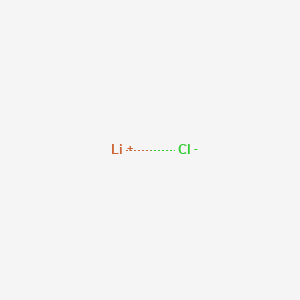
Lithium chloride
NMR and HPLC COA下载 MSDS下载 - Names:
Lithium chloride, GSK3beta inhibitor
- CAS号:
7447-41-8
MDL Number: MFCD00149764 - MF(分子式): LiCl MW(分子量): 42.39
- EINECS:231-212-3 Reaxys Number:
- Pubchem ID: Brand:BIOFOUNT
| 货品编码 | 规格 | 纯度 | 价格 (¥) | 现价(¥) | 特价(¥) | 库存描述 | 数量 | 总计 (¥) |
|---|---|---|---|---|---|---|---|---|
| JT1749-100g | 100g | AR,99% | ¥ 126.00 | ¥ 126.00 | 3-5days | ¥ 0.00 |
| 中文别名 | 氯化锂,氯化锂;7447-41-8;无水氯化锂;氯化锂(结晶);氯化锂(无水);GSK3beta抑制剂;GSK3β抑制剂 |
| 英文别名 | Lithium chloride;Lithium chloride (LiCl);Lithiumchloride;LiCl;Lithium chloride;GSK3beta inhibitor ;GSK3β inhibitor |
| CAS号 | 7447-41-8 |
| Inchi | InChI=1S/ClH.Li/h1H;/q;+1/p-1 |
| InchiKey | KWGKDLIKAYFUFQ-UHFFFAOYSA-M |
| 分子式 Molecular Weight | LiCl |
| 分子量 Formula | 42.39 |
| 溶解度Solubility | 溶于水(1 mg / ml),乙醇,乙醚,吡啶,硝基苯,丙酮和戊醇。 |
| 性状 | 白色无味固体 |
| 储藏条件 Storage conditions | 易潮解,室温密封 |
氯化锂(7447-41-8,Lithium chloride)毒理属性测试:
| 生物 | 测试类型 | 路线 | 报告剂量(标准化剂量) | 影响 | 参考 |
|---|---|---|---|---|---|
| mouse | LD50 | intravenous | 363 mg/kg (363 mg/kg) | BRAIN AND COVERINGS: RECORDINGS FROM SPECIFIC AREAS OF CNS; BEHAVIORAL: ANTIPSYCHOTIC | Oyo Yakuri. Pharmacometrics., 7(413), 1973 |
| mouse | LD50 | intracrebral | 14040 ug/kg (14.04 mg/kg) | SENSE ORGANS AND SPECIAL SENSES: PTOSIS: EYE; BEHAVIORAL: SOMNOLENCE (GENERAL DEPRESSED ACTIVITY) | Nippon Yakurigaku Zasshi. Japanese Journal of Pharmacology., 69(75), 1973 [PMID:4737528] |
| cat | LD50 | intraperitoneal | 492 mg/kg (492 mg/kg) | Russian Pharmacology and Toxicology, 42(9), 1979 | |
| cat | LDLo | subcutaneous | 450 mg/kg (450 mg/kg) | Environmental Quality and Safety, Supplement., 1(1), 1975 [PMID:1057514] | |
| rabbit | LD50 | oral | 800 mg/kg (800 mg/kg) | Farmakologiya i Toksikologiya, 39(53), 1976 [PMID:176062] |
氯化锂(7447-41-8,Lithium chloride)实验注意事项:
1.使用7447-41-8实验前需戴好防护眼镜,穿戴防护服和口罩,佩戴手套,避免与皮肤接触。
2.使用7447-41-8实验过程中如遇到有毒或者刺激性物质及有害物质产生,必要时实验操作需要手套箱内完成以免对实验人员造成伤害。
3.取样品7447-41-8的移液枪头需及时更换,必要时为避免交叉污染尽可能选择滤芯吸头。
4.称量药品时选用称量纸,并无风处取药和称量以免扬撒,试剂的容器使用前务必确保干净,并消毒。
5.取药品7447-41-8时尽量采用多个药勺分别使用,使用后清洗干净。
6.实验后产生的废弃物需分类存储,并交于专业生物废气物处理公司处理,以免造成环境污染。
大规格定制:定制产品请将信息发送至sales@bio-fount.com。
Lithium chloride(CAS:7447-41-8) Experimental considerations:
1. Wear protective glasses, protective clothing and masks, gloves, and avoid contact with the skin during the experiment.
2. The waste generated after the experiment needs to be stored separately, and handed over to a professional biological waste gas treatment company to avoid environmental pollution.
Tag:氯化锂(7447-41-8,Lithium chloride),氯化锂试剂,氯化锂的作用,氯化锂的应用,氯化锂的厂家,氯化锂的合成,氯化锂的图谱,氯化锂的价格,氯化锂的使用,氯化锂的注意事项,氯化锂的纯度,氯化锂的外观,氯化锂的溶解度,氯化锂的MSDS,氯化锂的熔点
| 产品说明 | Lithium chloride, GSK3beta inhibitor(氯化锂;7447-41-8)为无色晶体或粉末,低毒。氯化锂是具有Li(+)抗衡离子的金属氯化物盐。 氯化锂具有抗躁狂药的作用。氯化锂是一种无机氯化物和一种锂盐。 |
| Introduction | Lithium chloride, GSK3beta inhibitor is a colorless crystal or powder, low toxicity, salty taste, easy to absorb moisture and deliquescence |
| Application1 | 氯化锂(7447-41-8,Lithium chloride)用作分析试剂 |
| Application2 | 气相色谱固定相(最高使用温度650℃,可以作为溶剂为水) |
| Application3 |
| 警示图 | |
| 危险性 | warning |
| 危险性警示 | Not Available |
| 安全声明 | H302;H315;H319 |
| 安全防护 | P301;P312P330;P305;P351;P338 |
| 备注 | 避免吸入,误食以及与皮肤接触 |
| 象形图 |  |
|---|---|
| 信号 | Warning |
| GHS危险说明 |
Aggregated GHS information provided by 1111 companies from 31 notifications to the ECHA C&L Inventory. Each notification may be associated with multiple companies. Reported as not meeting GHS hazard criteria by 61 of 1111 companies. For more detailed information, please visit ECHA C&L website Of the 30 notification(s) provided by 1050 of 1111 companies with hazard statement code(s): H302 (97.9%): Harmful if swallowed [Warning Acute toxicity, oral] H315 (71.71%): Causes skin irritation [Warning Skin corrosion/irritation] H319 (83.05%): Causes serious eye irritation [Warning Serious eye damage/eye irritation] H335 (14.86%): May cause respiratory irritation [Warning Specific target organ toxicity, single exposure; Respiratory tract irritation] Information may vary between notifications depending on impurities, additives, and other factors. The percentage value in parenthesis indicates the notified classification ratio from companies that provide hazard codes. Only hazard codes with percentage values above 10% are shown. |
| 防范说明代码 |
P261, P264, P270, P271, P280, P301+P312, P302+P352, P304+P340, P305+P351+P338, P312, P321, P330, P332+P313, P337+P313, P362, P403+P233, P405, and P501 (The corresponding statement to each P-code can be found at the GHS Classification page.) |
| Distillation of LiCl from the LiCl–Li2O molten salt of the electrolytic reduction process(Journal of Radioanalytical and Nuclear Chemistry,2012) |
| Cellobiose as a model compound for cellulose to study the interactions in cellulose/lithium chloride/N-methyl-2-pyrrolidone systems(Cellulose,2017) |
| Study on a separation method of radionuclides (Ba, Sr) from LiCl salt wastes generated from the electroreduction process of spent nuclear fuel(Journal of Radioanalytical and Nuclear Chemistry,2011) |
| Effect of lithium chloride on the production and sialylation of Fc-fusion protein in Chinese hamster ovary cell culture(Applied Microbiology and Biotechnology,2014) |
| Behavior of a Boron-Doped Diamond Electrode in Molten Chlorides Containing Oxide Ion(Zero-Carbon Energy Kyoto 2009,2010) |
1.Solid-phase extraction of cobalt(II) from lithium chloride solutions using a poly(vinyl chloride)-based polymer inclusion membrane with Aliquat 336 as the carrier.
Kagaya S1, Cattrall RW, Kolev SD. Anal Sci. 2011;27(6):653-7.
The extraction of cobalt(II) from solutions containing various concentrations of lithium chloride, hydrochloric acid, and mixtures of lithium chloride plus hydrochloric acid is reported using a poly(vinyl chloride) (PVC)-based polymer inclusion membrane (PIM) containing 40% (w/w) Aliquat 336 as a carrier. The extraction from lithium chloride solutions and mixtures with hydrochloric acid is shown to be more effective than extraction from hydrochloric acid solutions alone. The solution concentrations giving the highest amounts of extraction are 7 mol L(-1) for lithium chloride and 8 mol L(-1) lithium chloride plus 1 mol L(-1) hydrochloric acid for mixed solutions. Cobalt(II) is easily stripped from the membrane using deionized water. The cobalt(II) species extracted into the membrane are CoCl(4)(2-) for lithium chloride solutions and HCoCl(4)(-) for mixed solutions; these form ion-pairs with Aliquat 336. It is also shown that both lithium chloride and hydrochloric acid are extracted by the PIM and suppress the extraction of cobalt(II) by forming ion-pairs in the membrane (i.
2.Multicomponent polyanions. 57. Large-angle X-ray scattering study of aqueous molybdophenylphosphonate solutions.
Lyxell DG1, Pettersson L, Persson I. Inorg Chem. 2001 Feb 12;40(4):584-92.
The radial distribution functions are calculated from large-angle X-ray scattering (LAXS) measurements for one concentrated aqueous molybdate/heptamolybdate solution and five aqueous molybdophenylphosphonate solutions (lithium chloride medium). Besides water and hydrated lithium, chloride, and molybdate ions, five species in all, having different nuclearities, are postulated to exist in the solutions, according to equilibrium studies using potentiometry and 31P NMR spectroscopy. The structures of the three polymolybdate species Mo7O24(6-), Mo8O26(4-), and (C6H5P)2Mo5O21(4-), for which the structures are determined crystallographically, are confirmed to exist also in aqueous solution. The principal structures of the remaining two complexes, (C6H5P)Mo6O21(OH2)5(2-) and (C6H5P)Mo7O25(OH2)4-, are elucidated with the use of structures of related species. Both anions have one group of four edge-sharing MoO6 octahedra and another group of two MoO6 octahedra connected by sharing corners, forming a bent unsymmetric six-membered ring, with the C6H5PO3 group placed on the crowded side of the ring.
3.Germination of Nosema algerae (Microspora) spores: conditional inhibition by D2O, ethanol and Hg2+ suggests dependence of water influxupon membrane hydration and specific transmembrane pathways.
Frixione E1, Ruiz L, Cerbón J, Undeen AH. J Eukaryot Microbiol. 1997 Mar-Apr;44(2):109-16.
The germination of microsporidian spores under conditions expected to affect water flow across the plasma membrane-wall complex was studied by assessing their responses to in vitro stimulation with Na+ or K+. Partial or full substitution of common water with D2O, which more effectively coats ions and electrostatically-charged cell surfaces with relatively stable hydration layers, delayed and inhibited spore germination in a concentration-dependent manner; yet, preincubation in 100% D2O did not change the normal response to standard stimulation. Water structure-breaking conditions, such as an increase in temperature (within the 15 degrees C to 40 degrees C range) or in ionic strength (1- to 10-fold normal), opposed the inhibition by D2O and allowed significant stimulation by Li+, the monovalent cation with the largest hydration diameter and a usually weak stimulant action on the spores. Ethanol, known to reduce water permeation across cell membranes and phospholipid bilayers, also caused a powerful and dose-dependent (1% to 4% v/v) inhibition of spore germination, but pretreatment with ethanol did not affect the normal response.
4.Unperturbed dimensions of Carrageenans in different salt solutions.
Marcelo G1, Saiz E, Tarazona MP. Biophys Chem. 2005 Mar 1;113(3):201-8.
Commercial samples of kappa-, iota-, and lambda-carrageenans were studied by means of Size Exclusion Chromatography with dual detection, i.e. employing a Refractive Index (concentration sensitive) and Multiangle Light Scattering (size sensitive) detectors. The eluent was water containing 0.1 M concentration of different ionic salts, namely LiCl, NaCl, KCl and NaI, with the exception of kappa-carrageenan that aggregates in presence of KCl. Molecular weight distributions and averages, coefficients of the scaling law of molecular dimensions and unperturbed dimensions were thus obtained from a single polydisperse sample of each polymer. Measurements were performed at 25 degrees C and all the systems were above theta conditions with values of the q exponent of the scaling law ranging from 0.51 to 0.59. Extrapolation to unperturbed conditions provides values of the characteristic ratio C(N)=56+/-1 and 40+/-5 respectively for lambda- and iota-carrageenans regardless of the ionic salt employed.
- 相关产品
-
< >
- 推荐产品
-
< >
- 最新产品
-
< >
新闻
怎么做细胞爬片免疫组化染色实验
细胞爬片免疫组化染色,是通过细胞爬片是让玻片浸在细胞培养基内,细胞在玻片上生长,主要用于组织学,免疫组织化学...
2020/7/20 22:04:33
提取病毒RNA的实验方法
提取病毒RNA方法分别有:异硫氰酸胍的提取病毒RNA方法、TRIzol LS提取法、Trizol法提取法等等...
2020/7/22 20:29:26
细胞培养耗材技术领先性
细胞培养板行业面临的核心痛点是:常规TC处理后表面亲水角随时间衰减,影响长期培养稳定性,BIOFOUNT高分...
2026/4/28 15:12:51
细胞培养耗材关键性能
细胞培养板的水接触角作为表面润湿性的核心指标,直接影响细胞贴壁、增殖、分化及功能表达,其中40°(低接触角/...
2026/4/28 14:52:44
chelex 100树脂国产替代之路-BIOFOUNT范德生物
Chelex 100螯合离子交换树脂对铜、铁和其他重金属?的偏好显著高于对钠、钾等一价阳离子的偏好。它对二价...
2025/11/4 14:22:46
9月开学季——助研新学期 范德送好礼
2025/8/28 15:30:55

Waxfilm 实验室封口膜:技术与国际市场的双重突破
在实验室耗材领域,封口膜是保障实验准确性与稳定性的关键产品之一。近年来,Waxfilm?实验室封口膜凭借其卓...
2025/5/13 13:03:40
Waxfilm实验室封口膜的5大突破
Waxfilm实验室封口膜作为生物功能膜领域的国产技术突破和品牌突破,是生物领域中国技术发展的缩影。
2025/5/6 17:02:07
各种微流控芯片键合方法的优缺点
微流控芯片键合:目前主要有激光焊接、热压键合、胶键合、超音波焊接,每种方法都有各自的优缺点。本文主要介绍聚酯...
2023/7/28 10:43:09
新一代微流控键合解决方案
微流控键合解决方案:微流控芯片制造的一个重要环节,也是最容易被忽视的--芯片键合。其中一个重要因素是:微流控...
2023/7/27 12:44:28