
 购物车
购物车 
-
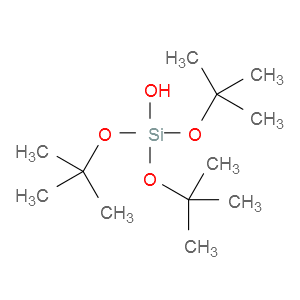
三(叔丁氧基)硅烷醇
NMR and HPLC COA下载 MSDS下载 - Names:
Tris(tert-butoxy)silanol
- CAS号:
18166-43-3
MDL Number: MFCD00271024 - MF(分子式): ((CH3)3CO)3SiOH MW(分子量): 264.43
- EINECS: Reaxys Number:
- Pubchem ID: Brand:BIOFOUNT
三(叔丁氧基)硅烷醇(18166-43-3);Tris(tert-butoxy)silanol;可以与各种金属烷基酰胺反应,三(叔丁氧基)硅烷醇作为气相沉积金属硅酸盐的前体,三(叔丁氧基)硅烷醇也是二氧化硅沉积的理想前体。
| 货品编码 | 规格 | 纯度 | 价格 (¥) | 现价(¥) | 特价(¥) | 库存描述 | 数量 | 总计 (¥) |
|---|---|---|---|---|---|---|---|---|
| JJ0257-5g | 5g | 97% | ¥ 1180.00 | ¥ 1180.00 | 3-5days | ¥ 0.00 | ||
| JJ0257-1g | 1g | 97% | ¥ 380.00 | ¥ 380.00 | 3-5days | ¥ 0.00 |
| 中文别名 | 三(叔丁氧基)硅烷醇(18166-43-3);三(叔-丁氧基)硅烷醇;三叔丁氧基硅醇; |
| 英文别名 | Tris(tert-butoxy)silanol(18166-43-3);;Tris(tert-butoxy)silanol |
| CAS号 | 18166-43-3 |
| Inchi | InChI=1S/C12H28O4Si/c1-10(2,3)14-17(13,15-11(4,5)6)16-12(7,8)9/h13H,1-9H3 |
| InchiKey | HLDBBQREZCVBMA-UHFFFAOYSA-N |
| 分子式 Molecular Weight | ((CH3)3CO)3SiOH |
| 分子量 Formula | 264.43 |
| 溶解度Solubility | NA |
| 性状 | solid |
| 储藏条件 Storage conditions | 充氩保存 |
三(叔丁氧基)硅烷醇(18166-43-3);Tris(tert-butoxy)silanol 实验注意事项:
1.使用18166-43-3实验前需戴好防护眼镜,穿戴防护服和口罩,佩戴手套,避免与皮肤接触。
2.使用18166-43-3实验过程中如遇到有毒或者刺激性物质及有害物质产生,必要时实验操作需要手套箱内完成以免对实验人员造成伤害。
3.取样品18166-43-3的移液枪头需及时更换,必要时为避免交叉污染尽可能选择滤芯吸头。
4.称量药品时选用称量纸,并无风处取药和称量以免扬撒,试剂的容器使用前务必确保干净,并消毒。
5.取药品18166-43-3时尽量采用多个药勺分别使用,使用后清洗干净。
6.实验后产生的废弃物需分类存储,并交于专业生物废气物处理公司处理,以免造成环境污染。
大规格定制:定制产品请将信息发送至sales@bio-fount.com。
Experimental considerations:
1. Wear protective glasses, protective clothing and masks, gloves, and avoid contact with the skin during the experiment.
2. The waste generated after the experiment needs to be stored separately, and handed over to a professional biological waste gas treatment company to avoid environmental pollution.
Tags:三(叔丁氧基)硅烷醇试剂,三(叔丁氧基)硅烷醇杂质,三(叔丁氧基)硅烷醇中间体,三(叔丁氧基)硅烷醇密度,三(叔丁氧基)硅烷醇溶解度,三(叔丁氧基)硅烷醇旋光度,三(叔丁氧基)硅烷醇纯度,三(叔丁氧基)硅烷醇购买,三(叔丁氧基)硅烷醇闪点,

| 产品说明 | 三(叔丁氧基)硅烷醇(18166-43-3;Tris(tert-butoxy)silanol;)三(叔丁氧基)硅烷醇可以与各种金属烷基酰胺反应,作为气相沉积金属硅酸盐的前体,它也是二氧化硅沉积的理想前体, |
| Introduction | Tris(tert-butoxy)silanol(18166-43-3,TBS)Atomic layer deposition (ALD) used as a highly conformal layer of amorphous silica and alumina nanolayers |
| Application1 | |
| Application2 | 三(叔丁氧基)硅烷醇与四(二甲基氨基)-铪蒸气(Hf(N(CH3)2)4)反应,用于硅酸铪玻璃膜的气相沉积 |
| Application3 | 三(叔丁氧基)硅烷醇被用于无定形二氧化硅和氧化铝纳米层的高度共形层的原子层沉积(ALD) |
| 警示图 | |
| 危险性 | warning |
| 危险性警示 | Not Available |
| 安全声明 | H303吞入可能有害+H313皮肤接触可能有害+H333吸入可能对身体有害 |
| 安全防护 | P264处理后彻底清洗+P280戴防护手套/穿防护服/戴防护眼罩/戴防护面具+P305如果进入眼睛+P351用水小心冲洗几分钟+P338取出隐形眼镜(如果有)并且易于操作,继续冲洗+P337如果眼睛刺激持续+P313获得医疗建议/护理 |
| 备注 | 避免吸入,误食以及与皮肤接触 |
| Stable, microfabricated thin layer chromatography plates without volume distortion on patterned, carbon and Al?O?-primed carbon nanotube forests PMID 22926056; Journal of chromatography. A 2012 Sep; 1 |
| Rapid atomic layer deposition of silica nanolaminates: synergistic catalysis of Lewis/Br?nsted acid sites and interfacial interactions PMID 24126605; Nanoscale 2013 Dec; 5(23):11856-69 |
| Rapid vapor deposition of highly conformal silica nanolaminates PMID 12376699; Science (New York, N.Y.) 2002 Oct; 298(5592):402-6 Name matches: trimethylaluminum tris(tert-butoxy)silanol |
| Chitosan-silane sol-gel hybrid thin films with controllable layer thickness and morphology PMID 23465932; Carbohydrate polymers 2013 Mar; 93(1):285-90 Name matches: (methoxymethyl)trimethyl-silane tri |
| Chitosan-silane sol-gel hybrid thin films with controllable layer thickness and morphology PMID 23465932; Carbohydrate polymers 2013 Mar; 93(1):285-90 Name matches: hexamethoxydisilane tri-tert-butoxy |
三(叔丁氧基)硅烷醇(18166-43-3);Tris(tert-butoxy)silanol 参考文献:
1、Stable, microfabricated thin layer chromatography plates without volume distortion on patterned, carbon and Al?O?-primed carbon nanotube forests
David S Jensen 1, Supriya S Kanyal, Vipul Gupta, Michael A Vail, Andrew E Dadson, Mark Engelhard, Richard Vanfleet, Robert C Davis, Matthew R Linford
Abstract Some of us recently described the fabrication of thin layer chromatography (TLC) plates from patterned carbon nanotube (CNT) forests via direct infiltration/coating of the CNTs by low pressure chemical vapor deposition (LPCVD) of silicon from SiH?, followed by high temperature oxidation of the CNTs and Si. Herein we present an improved microfabrication process for the preparation of these TLC plates. First, a few nanometers of carbon and/or a thin film of Al?O? is deposited on the CNTs. This method of priming the CNTs for subsequent depositions appears to be new. X-ray photoelectron spectroscopy confirms the presence of additional oxygen after carbon deposition. After priming, the plates are coated by rapid, conformal deposition of an inorganic material that does not require subsequent oxidation, i.e., by a fast pseudo atomic layer deposition (ψ-ALD) of SiO? from trimethylaluminum and tris(tert-butoxy)silanol. Unlike devices described previously, faithful reproduction of the features in the masks is still observed after oxidation. A bonded, amino phase on the resulting plates shows fast, highly efficient separations of fluorescent dyes (plate heights in the range of 1.6-7.7 μm). Extensive characterization of the new materials by TEM, SEM, EDAX, DRIFT, and XPS is reported. A substantially lower process temperature for the removal of the CNT scaffold is possible as a result of the already oxidized materials used.
2、Rapid atomic layer deposition of silica nanolaminates: synergistic catalysis of Lewis/Brønsted acid sites and interfacial interactions
Guoyong Fang 1, Jing Ma
Abstract Rapid atomic layer deposition (RALD) has been applied to prepare various nanolaminates with repeated multilayer structures. The possible reaction pathways for RALD of the Al2O3/SiO2 nanolaminate using trimethylaluminum (TMA) and tris(tert-butoxy)silanol (TBS) are investigated by using density functional theory (DFT) calculations. The introduction of a Lewis-acid catalyst, TMA, can result in the formation of the catalytic site, which accelerates the propagation of the siloxane polymer. The rate-determining step of whole RALD is the elimination of isobutene of the tert-butoxy groups. The Brønsted acid site of [AlO4] can catalyze the elimination of isobutene. At the same time, the interfacial interactions, such as hydrogen bonding interactions between tert-butoxy groups and the surface, further catalyze the elimination of isobutene and accelerate SiO2 RALD reactions. The synergistic catalysis of Lewis/Brønsted acid sites and interfacial interactions may be applied in the RALD fabrication of other silica nanolaminates, such as HfO2/SiO2, ZrO2/SiO2, and TiO2/SiO2, in microelectronics, catalysis, energy storage, and conversion.
- 相关产品
-
< >
- 推荐产品
-
< >
- 最新产品
-
< >
新闻
怎么做细胞爬片免疫组化染色实验
细胞爬片免疫组化染色,是通过细胞爬片是让玻片浸在细胞培养基内,细胞在玻片上生长,主要用于组织学,免疫组织化学...
2020/7/20 22:04:33
提取病毒RNA的实验方法
提取病毒RNA方法分别有:异硫氰酸胍的提取病毒RNA方法、TRIzol LS提取法、Trizol法提取法等等...
2020/7/22 20:29:26
细胞培养耗材技术领先性
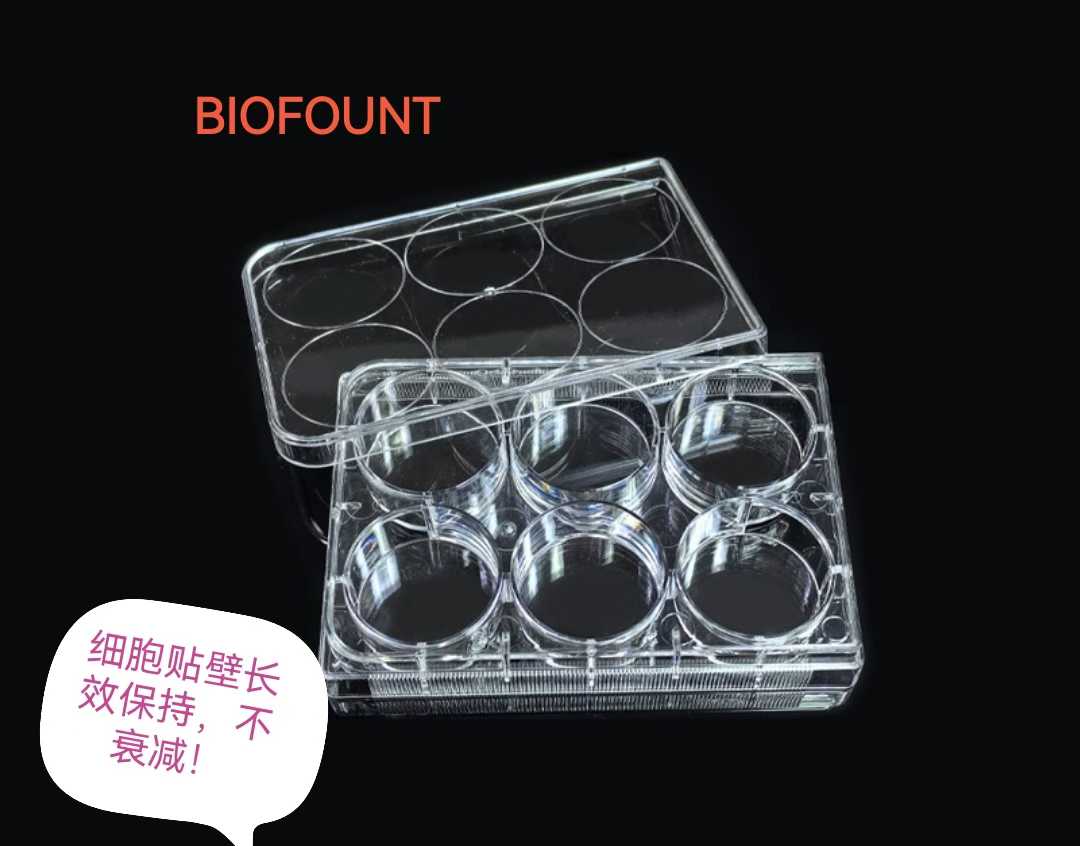
细胞培养板行业面临的核心痛点是:常规TC处理后表面亲水角随时间衰减,影响长期培养稳定性,BIOFOUNT高分...
2026/4/28 15:12:51
细胞培养耗材关键性能
细胞培养板的水接触角作为表面润湿性的核心指标,直接影响细胞贴壁、增殖、分化及功能表达,其中40°(低接触角/...
2026/4/28 14:52:44
chelex 100树脂国产替代之路-BIOFOUNT范德生物
Chelex 100螯合离子交换树脂对铜、铁和其他重金属?的偏好显著高于对钠、钾等一价阳离子的偏好。它对二价...
2025/11/4 14:22:46

9月开学季——助研新学期 范德送好礼
2025/8/28 15:30:55

Waxfilm 实验室封口膜:技术与国际市场的双重突破
在实验室耗材领域,封口膜是保障实验准确性与稳定性的关键产品之一。近年来,Waxfilm?实验室封口膜凭借其卓...
2025/5/13 13:03:40
Waxfilm实验室封口膜的5大突破
Waxfilm实验室封口膜作为生物功能膜领域的国产技术突破和品牌突破,是生物领域中国技术发展的缩影。
2025/5/6 17:02:07
各种微流控芯片键合方法的优缺点
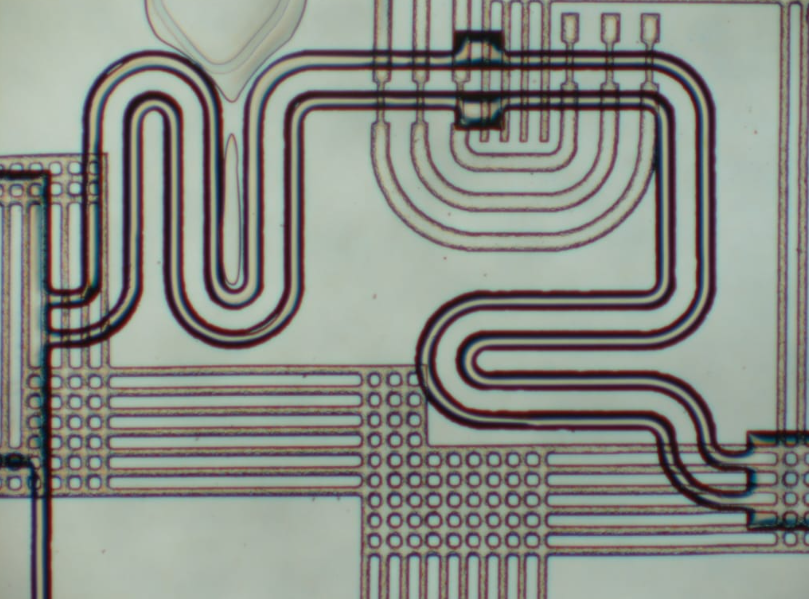
微流控芯片键合:目前主要有激光焊接、热压键合、胶键合、超音波焊接,每种方法都有各自的优缺点。本文主要介绍聚酯...
2023/7/28 10:43:09
新一代微流控键合解决方案
微流控键合解决方案:微流控芯片制造的一个重要环节,也是最容易被忽视的--芯片键合。其中一个重要因素是:微流控...
2023/7/27 12:44:28