
 购物车
购物车 
-
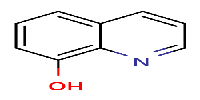
8-羟基喹啉
NMR and HPLC COA下载 MSDS下载 - Names:
8-Hydroxyquinoline
- CAS号:
148-24-3
MDL Number: MFCD00006807 - MF(分子式): C9H7NO MW(分子量): 145.16
- EINECS:205-711-1 Reaxys Number:
- Pubchem ID: Brand:BIOFOUNT
| 货品编码 | 规格 | 纯度 | 价格 (¥) | 现价(¥) | 特价(¥) | 库存描述 | 数量 | 总计 (¥) |
|---|---|---|---|---|---|---|---|---|
| SS0271-500g | 500g | 生物技术 | ¥ 319.00 | ¥ 319.00 | 1-3days | ¥ 0.00 | ||
| SS0271-100g | 100g | 生物技术 | ¥ 98.00 | ¥ 98.00 | 1-3days | ¥ 0.00 | ||
| SS0001-500g | 500g | AR,99% | ¥ 318.00 | ¥ 318.00 | 196 | 1-3days | ¥ 0.00 | |
| SS0001-100g | 100g | AR,99% | ¥ 102.00 | ¥ 102.00 | 56 | 1-3days | ¥ 0.00 | |
| SS0001-25g | 25g | AR,99% | ¥ 48.00 | ¥ 48.00 | 1-3days | ¥ 0.00 |
| 中文别名 | 8-羟基喹啉(148-24-3,8-Hydroxyquinoline);8-喹啉醇;8-氢氧化喹啉;喹啉醇;8-羟基氮杂萘;8羟基喹啉 |
| 英文别名 | 8-Hydroxyquinoline(CAS:148-24-3);8-Hydroxyquinoline;8-Quinolinol;8-Quinolinone Quinophenol Oxine |
| CAS号 | 148-24-3 |
| Inchi | InChI=1S/C9H7NO/c11-8-5-1-3-7-4-2-6-10-9(7)8/h1-6,11H |
| InchiKey | MCJGNVYPOGVAJF-UHFFFAOYSA-N |
| 分子式 Molecular Weight | C9H7NO |
| 分子量 Formula | 145.16 |
| 溶解度Solubility | DMSO : 50 mg/mL (344.45 mM; Need ultrasonic) |
| 性状 | 灰白色至棕色固体粉末 |
| 储藏条件 Storage conditions | 密封避光保存。 |
8-羟基喹啉(148-24-3,8-Hydroxyquinoline)毒理属性测试:
| 生物 | 测试类型 | 路线 | 报告剂量(标准化剂量) | 影响 | 参考 |
|---|---|---|---|---|---|
| rat | LD50 | oral | 1200 mg/kg (1200 mg/kg) | Pesticide Chemicals Official Compendium, Association of the American Pesticide Control Officials, Inc., 1966., -(602), 1966 | |
| rat | LC50 | inhalation | >1210 mg/m3/6H (1210 mg/kg) | Journal of the American College of Toxicology., 11(497), 1992 | |
| mouse | LD50 | oral | 20 gm/kg (20000 mg/kg) | Drugs in Japan, 6(271), 1982 | |
| mouse | LD50 | intraperitoneal | 43 mg/kg (43 mg/kg) | Farmakologiya i Toksikologiya, 42(396), 1979 [PMID:477962] | |
| mouse | LD50 | subcutaneous | 83600 ug/kg (83.6 mg/kg) | Pharmazie., 1(150), 1946 |
8-羟基喹啉(148-24-3,8-Hydroxyquinoline)实验注意事项:
1.使用148-24-3实验前需戴好防护眼镜,穿戴防护服和口罩,佩戴手套,避免与皮肤接触。
2.使用148-24-3实验过程中如遇到有毒或者刺激性物质及有害物质产生,必要时实验操作需要手套箱内完成以免对实验人员造成伤害。
3.取样品148-24-3的移液枪头需及时更换,必要时为避免交叉污染尽可能选择滤芯吸头。
4.称量药品时选用称量纸,并无风处取药和称量以免扬撒,试剂的容器使用前务必确保干净,并消毒。
5.取药品148-24-3时尽量采用多个药勺分别使用,使用后清洗干净。
6.实验后产生的废弃物需分类存储,并交于专业生物废气物处理公司处理,以免造成环境污染。
大规格定制:定制产品请将信息发送至sales@bio-fount.com。
8-Hydroxyquinoline(CAS:148-24-3) Experimental considerations:
1. Wear protective glasses, protective clothing and masks, gloves, and avoid contact with the skin during the experiment.
2. The waste generated after the experiment needs to be stored separately, and handed over to a professional biological waste gas treatment company to avoid environmental pollution.
tags:8-羟基喹啉(148-24-3,8-Hydroxyquinoline),8-羟基喹啉溶解性,8供应-羟基喹啉;8-羟基喹啉应用;8-羟基喹啉水溶解性;8-羟基喹啉DMSO溶解性;8-羟基喹啉衍生物;8-羟基喹啉英文名;8-羟基喹啉MSDS;8-羟基喹啉结构式
| 产品说明 | 8-羟基喹啉(148-24-3)用于沉淀和分离金属,制备杀真菌剂以及用作染料,8-羟基喹啉的其他参数见主页。 |
| Introduction | 8-Hydroxyquinoline (148-24-3;8-羟基喹啉) is used for precipitation and separation of metals, preparation of fungicides and as dyes. See the homepage for other parameters of 148-24-3. |
| Application1 | 8-羟基喹啉杀菌性能可用于控制葡萄和番茄的灰霉病。 |
| Application2 | 8-羟基喹啉可以用作沉淀和分离金属离子的沉淀剂和萃取剂 |
| Application3 | 8-羟基喹啉具有抗菌剂,铁螯合剂,防腐剂和抗真菌农药的作用。 |
| 警示图 | |
| 危险性 | warning |
| 危险性警示 | Not Available |
| 安全声明 | H302 |
| 安全防护 | P264处理后彻底清洗+P280戴防护手套/穿防护服/戴防护眼罩/戴防护面具+P305如果进入眼睛+P351用水小心冲洗几分钟+P338取出隐形眼镜(如果有)并且易于操作,继续冲洗+P337如果眼睛刺激持续+P313获得医疗建议/护理 |
| 备注 | 避免吸入,误食以及与皮肤接触 |
| 象形图 |      |
|---|---|
| 信号 | Danger |
| GHS危险说明 |
H301: Toxic if swallowed [Danger Acute toxicity, oral] H317: May cause an allergic skin reaction [Warning Sensitization, Skin] H318: Causes serious eye damage [Danger Serious eye damage/eye irritation] H360D: May damage the unborn child [Danger Reproductive toxicity] H400: Very toxic to aquatic life [Warning Hazardous to the aquatic environment, acute hazard] H410: Very toxic to aquatic life with long lasting effects [Warning Hazardous to the aquatic environment, long-term hazard] |
| 防范说明代码 |
P201, P202, P261, P264, P270, P272, P273, P280, P281, P301+P310, P302+P352, P305+P351+P338, P308+P313, P310, P321, P330, P333+P313, P363, P391, P405, and P501 |
| Intercalation of 8-hydroxyquinoline into Na(I)- and Zn(II)-Tunisian montmorillonites: characterization and luminescence properties of elaborated hybrids |
| Thermal behaviour of 8-hydroxyquinoline complexes with nickel(II)/copper(II)/zinc(II) hydroxides(Journal of thermal analysis,1997) |
| Comparison of electrical characteristics of zinc oxide and cadmium sulfide films covered with 8-hydroxyquinoline for diode applications(Journal of Materials Science: Materials in Electronics,2019) |
| Layer-by-layer assembly of luminescent ultrathin films by layered double hydroxides and neutral Al–Phen–Hq(Research on Chemical Intermediates,2019) |
| Thermal and electrochemical studies of Cu(II) 8-hydroxyquinoline organophilic montmorillonite(Journal of Thermal Analysis and Calorimetry,2017) |
1.[Pretreatment of Aluminum-Lithium Alloy Sample and Determination of Argentum and Lithium by Spectral Analysis].
Zhou H, Tan Q, Gao YL, Sang SH, Chen W. Guang Pu Xue Yu Guang Pu Fen Xi. 2015 Oct;35(10):2886-90.
Inductively Coupled Plasma Optical Emission Spectrometry (ICP-OES), Flame Atomic Absorption Spectrometry (FAAS) and Visible Spectrometry (VS) was applied for determination of Ag and Li in lithium-aluminium alloy standard sample and test sample, their respective advantages and disadvantages were compared, the excellent selectivity of ICP-OES was confirmed by analyses of certified standard sample. Three different sample digestion methods were compared and discussed in this study. It was found that the better accuracy would be obtained by digesting sample with chloroazotic acid while the content of Li was measured by FAAS, and it was better to digest sample with hydrochloric acid and hydrogen peroxide while determining Ag and Li by ICP-OES simultaneously and determining Ag by FAAS and VS. The interference of co-existing elements and elimination methods was detailedly discussed. Ammonium hydroxide was added to adjust the sample solution into alkalescent and Al, Ti, Zr was precipitated by forming hydroxide precipitation, Mg and Cu was formed complex precipitation with 8-hydroxyquinoline in this condition, then the interference from matrix element to determinate Ag by FAAS was eliminated.
2.Red Phosphorescent Bis-Cyclometalated Iridium Complexes with Fluorine-, Phenyl-, and Fluorophenyl-Substituted 2-Arylquinoline Ligands.
Kim J1, Lee KH1, Lee SJ2, Lee HW2, Kim YK3, Kim YS4, Yoon SS5. Chemistry. 2016 Mar 14;22(12):4036-45. doi: 10.1002/chem.201504392. Epub 2016 Feb 16.
Red phosphorescent iridium(III) complexes based on fluorine-, phenyl-, and fluorophenyl-substituted 2-arylquinoline ligands were designed and synthesized. To investigate their electrophosphorescent properties, devices were fabricated with the following structure: indium tin oxide (ITO)/4,4',4''-tris[2-naphthyl(phenyl)amino]triphenylamine (2-TNATA)/4,4'-bis[N-(1-naphthyl)-N-phenylamino]biphenyl (NPB)/4,4'-bis(N-carbazolyl)-1,1'-biphenyl (CBP): 8 % iridium (III) complexes/bathocuproine (BCP)/tris(8-hydroxyquinolinato)aluminum (Alq3 )/8-hydroxyquinoline lithium (Liq)/Al. All devices, which use these materials showed efficient red emissions. In particular, a device exhibited a saturated red emission with a maximum luminance, external quantum efficiency, and luminous efficiency of 14200?cd m(-2) , 8.44 %, and 6.58?cd A(-1) at 20?mA cm(-2) , respectively. The CIE (x, y) coordinates of this device are (0.67, 0.33) at 12.0?V.
3.Efficient blue and white polymer light emitting diodes based on a well charge balanced, core modified polyfluorene derivative.
Das D1, Gopikrishna P, Singh A, Dey A, Iyer PK. Phys Chem Chem Phys. 2016 Mar 14;18(10):7389-94. doi: 10.1039/c6cp00113k. Epub 2016 Feb 22.
Fabrication of efficient blue and white polymer light-emitting diodes (PLEDs) using a well charge balanced, core modified polyfluorene derivative, poly[2,7-(9,9'-dioctylfluorene)-co-N-phenyl-1,8-naphthalimide (99:01)] (PFONPN01), is presented. The excellent film forming properties as observed from the morphological study and the enhanced electron transport properties due to the inclusion of the NPN unit in the PFO main chain resulted in improved device properties. Bright blue light was observed from single layer PLEDs with PFONPN01 as an emissive layer (EML) as well as from double layer PLEDs using tris-(8-hydroxyquinoline) aluminum (Alq3) as an electron transporting layer (ETL) and LiF/Al as a cathode. The effect of ETL thickness on the device performance was studied by varying the Alq3 thickness (5 nm, 10 nm and 20 nm) and the device with an ETL thickness of 20 nm was found to exhibit the maximum brightness value of 11 662 cd m(-2) with a maximum luminous efficiency of 4.
4.A series of dinuclear Dy(iii) complexes bridged by 2-methyl-8-hydroxylquinoline: replacement on the periphery coordinated β-diketonate terminal leads to different single-molecule magnetic properties.
Zhang WY1, Tian YM, Li HF, Chen P, Sun WB, Zhang YQ, Yan PF. Dalton Trans. 2016 Mar 7;45(9):3863-73. doi: 10.1039/c5dt04449a. Epub 2016 Feb 1.
A series of HMq-bridged dinuclear dysprosium complexes, namely, [Dy(acac)2(CH3OH)]2(μ-HMq)2 (1), [Dy(DBM)2]2(μ-HMq)2(n-C6H14) (2), [Dy(hmac)2]2(μ-HMq)2 (3) and [Dy(hfac)3]2(μ-HMq)2 (4) (HMq = 2-methyl-8-hydroxyquinoline, acac = acetylacetone, DBM = dibenzoylmethane, hmac = hexamethylacetylacetonate and hfac = hexafluoroacetylacetonate), were structurally and magnetically characterized. X-ray crystallographic analyses of the structures reveal that HMq serves as the effective bridge to link two Dy(iii) centers by means of the phenoxyl oxygen and nitrogen atoms and the periphery β-diketonate ligands complete the coordination sphere by bidentate oxygen atoms. The different substituents on the β-diketonate terminal lead to different coordination models mostly due to the steric hindrance of these substituents, and the electron-withdrawing or donating effects likely influence the strength of the ligand fields and the Dy(iii) ion anisotropy. Measurements of alternating-current (ac) susceptibility on complexes 1-4 reveal that complexes 3 and 4 display significant zero-field single-molecule magnetic (SMM) behavior with barrier energy Ueff/kB = 14.
- 相关产品
-
< >
- 推荐产品
-
< >
- 最新产品
-
< >
新闻
怎么做细胞爬片免疫组化染色实验
细胞爬片免疫组化染色,是通过细胞爬片是让玻片浸在细胞培养基内,细胞在玻片上生长,主要用于组织学,免疫组织化学...
2020/7/20 22:04:33
提取病毒RNA的实验方法
提取病毒RNA方法分别有:异硫氰酸胍的提取病毒RNA方法、TRIzol LS提取法、Trizol法提取法等等...
2020/7/22 20:29:26
细胞培养耗材技术领先性
细胞培养板行业面临的核心痛点是:常规TC处理后表面亲水角随时间衰减,影响长期培养稳定性,BIOFOUNT高分...
2026/4/28 15:12:51
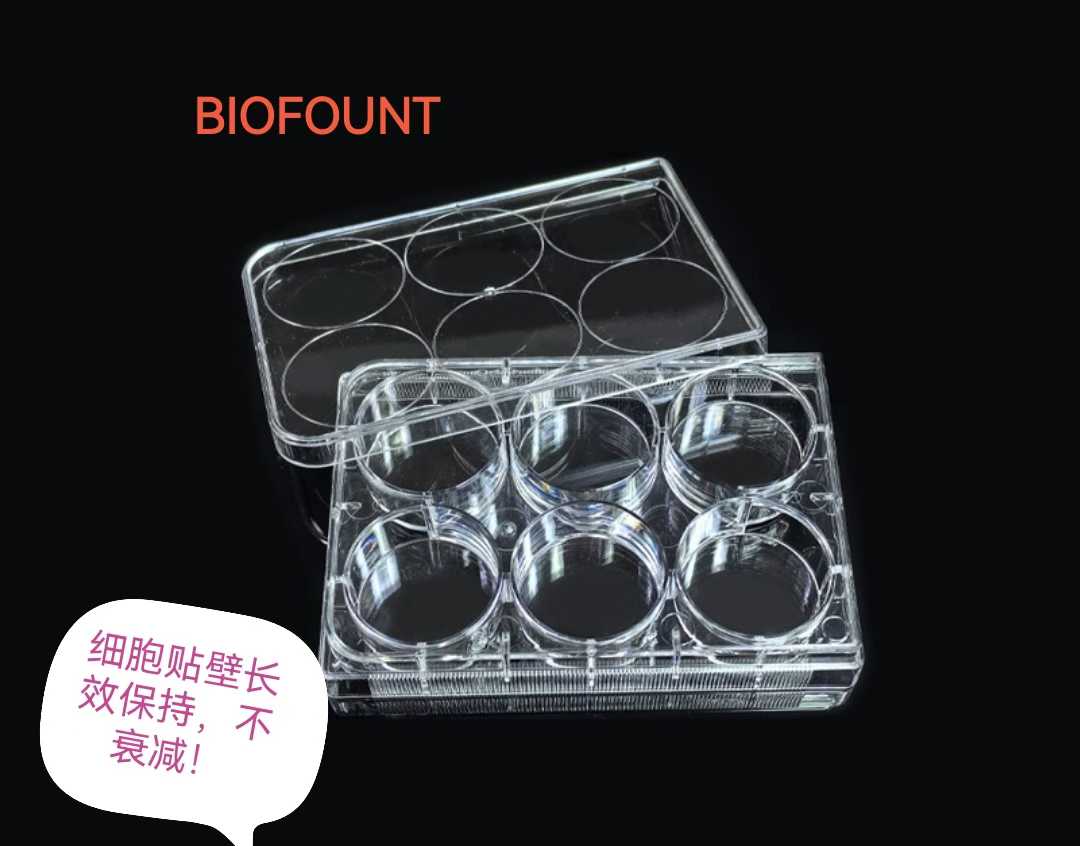
细胞培养耗材关键性能
细胞培养板的水接触角作为表面润湿性的核心指标,直接影响细胞贴壁、增殖、分化及功能表达,其中40°(低接触角/...
2026/4/28 14:52:44
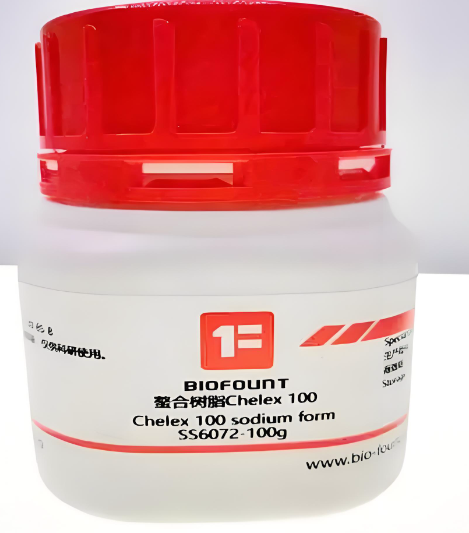
chelex 100树脂国产替代之路-BIOFOUNT范德生物
Chelex 100螯合离子交换树脂对铜、铁和其他重金属?的偏好显著高于对钠、钾等一价阳离子的偏好。它对二价...
2025/11/4 14:22:46
9月开学季——助研新学期 范德送好礼
2025/8/28 15:30:55

Waxfilm 实验室封口膜:技术与国际市场的双重突破
在实验室耗材领域,封口膜是保障实验准确性与稳定性的关键产品之一。近年来,Waxfilm?实验室封口膜凭借其卓...
2025/5/13 13:03:40
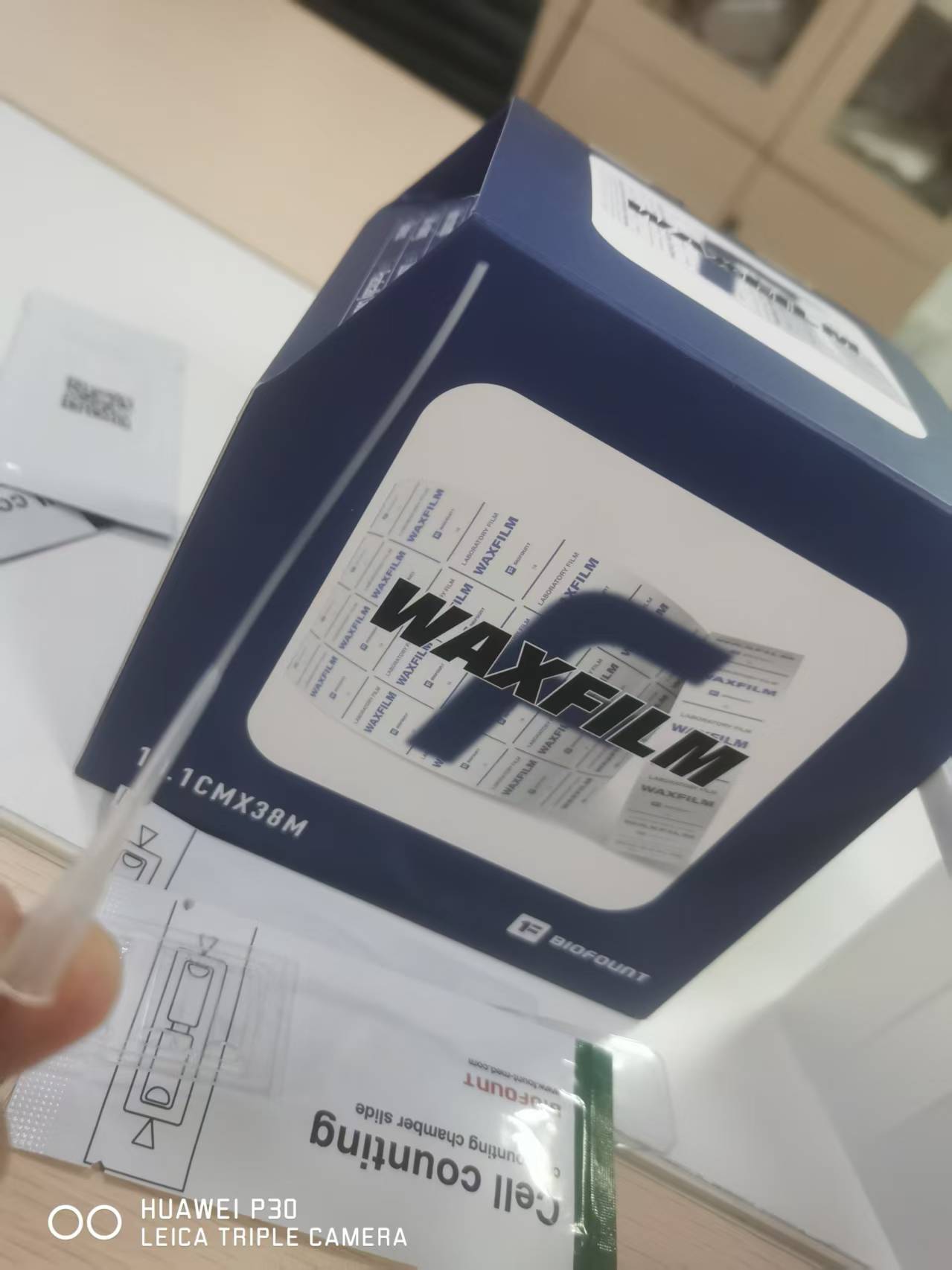
Waxfilm实验室封口膜的5大突破
Waxfilm实验室封口膜作为生物功能膜领域的国产技术突破和品牌突破,是生物领域中国技术发展的缩影。
2025/5/6 17:02:07
各种微流控芯片键合方法的优缺点
微流控芯片键合:目前主要有激光焊接、热压键合、胶键合、超音波焊接,每种方法都有各自的优缺点。本文主要介绍聚酯...
2023/7/28 10:43:09
新一代微流控键合解决方案
微流控键合解决方案:微流控芯片制造的一个重要环节,也是最容易被忽视的--芯片键合。其中一个重要因素是:微流控...
2023/7/27 12:44:28